


Vehicle Runoff Compliance for Mobile Detailing
A clean vehicle should not leave dirty water at the curb. In Marin County, vehicle runoff compliance is part of responsible car care because the water that leaves a driveway, parking lot, or roadside wash area can enter storm drains and flow untreated toward local creeks, bays, and the Pacific.
That runoff is rarely just water. It may carry brake dust, oil residue, tire particles, road grime, heavy metals, cleaning chemicals, and sediment. A professional detail should improve the condition of your vehicle without shifting that contamination into the watershed outside your home or workplace.
What Vehicle Runoff Compliance Means
Vehicle runoff compliance means controlling washwater so it does not enter a storm drain, gutter, or natural waterway. Storm drains are designed to move rainwater away from streets. Unlike water sent down an indoor sink or toilet, stormwater generally does not travel through a wastewater treatment facility before reaching local waterways.
For vehicle owners, the practical takeaway is straightforward: avoid allowing soap, degreaser, dirty rinse water, and visible vehicle contaminants to run down the street. For mobile detailers, the responsibility is even greater. A professional crew must arrive prepared to manage water, equipment, products, and recovery on the customer’s property.
The right process depends on the service, surface, site conditions, and amount of contamination involved. A light maintenance wash on a well-maintained ceramic-coated vehicle requires far less water than an oxidation removal service, heavily soiled work truck, RV, or fleet vehicle. Compliance is not one piece of equipment or one bottle labeled “eco-friendly.” It is an operating process.
Why Driveway Washing Can Create a Problem
A hose-and-bucket wash may appear harmless, especially when only a small amount of water is visible. But water follows the grade of the pavement. Once it reaches the gutter, it can pick up additional debris on its way to a storm drain.
Brake dust is a common concern around wheels and lower panels. So are petroleum residue, traffic film, leaked fluids, and the concentrated grime that collects in wheel wells. Strong cleaners can also create avoidable problems when they are overused, poorly diluted, or rinsed into a drainage path.
Water use matters, but water quality matters just as much. A high-volume wash that runs into the street is not responsible simply because the products are biodegradable. Products can break down over time while still affecting water quality when discharged directly into a storm-drain system.
A Compliant Mobile Detailing Process
Responsible mobile detailing starts before the first wheel is cleaned. The technician evaluates the work area, locates nearby drains, assesses the slope of the pavement, and determines whether the site can support safe washwater containment and recovery. If conditions do not allow for it, the service plan may need to change.
Water Is Brought to the Job
A self-contained mobile operation does not need to rely on a customer’s hose connection. Professional detailing vans can carry prefiltered, dechlorinated water and their own power source, which helps control the work process from start to finish.
This is especially useful for offices, multi-unit properties, fleet yards, and homes where access to water is limited or where a technician needs to minimize disruption. It also allows water use to be measured and managed rather than left to an open hose.
Low-Water Methods Reduce the Recovery Burden
The best gallon of washwater is the gallon that never needs to be recovered. Low-water hand-washing methods, carefully controlled spray application, microfiber towels, and steam cleaning all reduce excess runoff while still delivering a thorough result.
For example, steam can lift interior soil, sanitize selected hard surfaces, and help treat crevices without soaking carpets or flooding door panels. In exterior work, pH-balanced surfactants and proper dwell time can loosen traffic film so technicians need less aggressive rinsing. The method must still fit the vehicle and condition. A mud-covered truck or heavily contaminated RV may need a more involved approach than a lightly dusty sedan.
Washwater Is Contained and Recovered
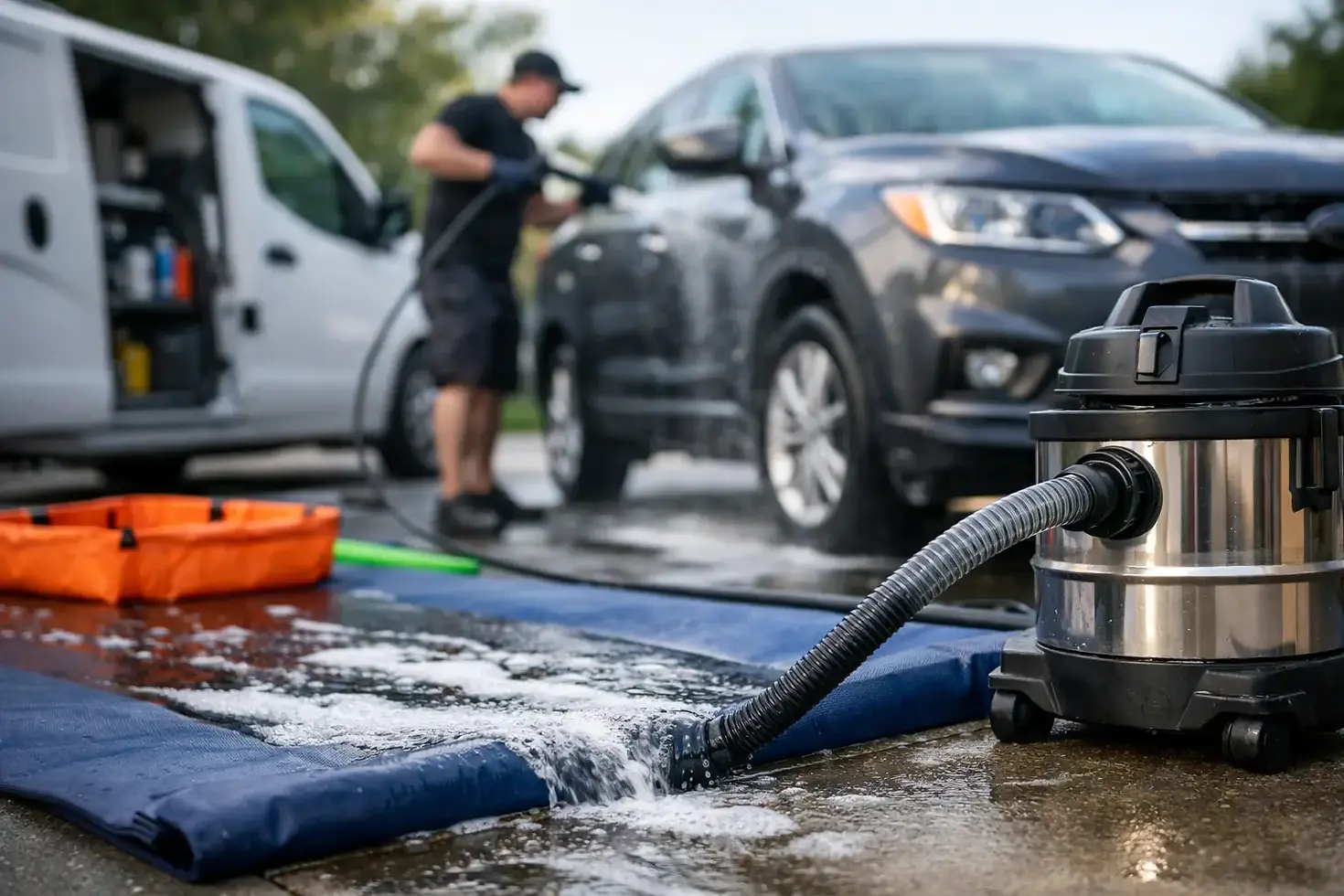
Where wet washing is performed, washwater recovery is central to vehicle runoff compliance. Recovery tools can capture water near the work area before it travels toward a drain. Recovered water is then managed through the appropriate disposal process rather than released to the gutter.
Containment is not just for the final rinse. Wheel cleaning, degreasing, and heavy soil removal deserve particular attention because those steps often create the most contaminated water. Technicians should use only the amount of product and water necessary, then keep the work area orderly throughout the appointment.
Products Should Be Selected for the Job
Naturally derived and pH-balanced products can be a thoughtful part of an environmentally disciplined process, particularly for routine maintenance. But product selection is not a substitute for recovery. Even a gentle cleaner can carry pollutants off the vehicle when it mixes with accumulated road soil.
A capable detailer uses products according to the material being cleaned: clear coat, chrome, aluminum, leather, vinyl, fabric, glass, rubber, or plastic trim. This protects the vehicle while reducing the need for repeated chemical applications. Strong alkaline or acidic products have a place in trained hands for specific correction work, but they should not be the default answer to every dirty wheel or stained surface.
Compliance Protects More Than Local Waterways
A controlled wash process benefits your vehicle as well as the environment. Proper hand washing, soft microfiber contact points, and clean water management reduce the chance of dragging abrasive grit across paint. That is especially valuable for dark finishes, luxury vehicles, newer clear coats, and vehicles protected with ceramic SiO2 or SiC nanocoatings.
It also supports a more complete detail. When a technician is not rushing to manage uncontrolled water, they can focus on the areas that determine the finished result: wheel faces and barrels, jambs, badges, lower rocker panels, glass edges, interior touchpoints, carpets, and trim.
For commercial operators, runoff discipline can also support cleaner site management. Fleets, service vans, delivery vehicles, and specialty equipment often accumulate heavier soil than personal vehicles. Scheduling professional service at the worksite can keep vehicles presentable without turning a parking area into a wash bay with water flowing toward storm drains.
Questions to Ask Before Booking a Mobile Detail
Not every mobile wash follows the same standards. Before scheduling, ask how the provider handles washwater, whether they bring their own water and power, and what measures they use near storm drains. It is also reasonable to ask how they approach heavily soiled vehicles, engine-bay work, mold remediation, or oxidation removal, since these services can require different controls.
Be cautious of vague claims such as “green wash” when there is no explanation of water use, product handling, or recovery. A professional should be able to describe the process in plain language and explain any site limitations before work begins.
Property conditions matter, too. A flat, contained work area is generally easier to manage than a steep driveway draining directly toward the street. If your vehicle is parked near a curbside drain, moving it to a better location may make the appointment safer and more effective. Apartment and office locations may also have property rules that affect where detailing can be performed.
Responsible Care, Delivered Where You Are
The Last Detail approaches mobile service with the same care used on paint correction, interior steam cleaning, stain removal, ceramic maintenance, and restoration-oriented details. The goal is not simply to make a vehicle look clean for the afternoon. It is to deliver a finish that is properly cared for, a cabin that feels healthier, and a service process that respects Marin County’s waterways.
When you book your next detail, choose a provider prepared to control the water as carefully as they clean the paint. Your vehicle can leave looking sharper, protected for the road ahead, and cleaner in every sense of the word.


Comments